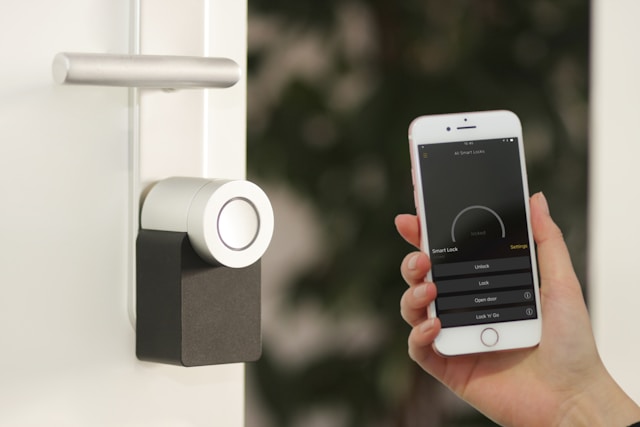
The choice between a packaged smart home and a customised one is usually framed as convenience against control. Four documented shutdowns since 2022 suggest a blunter framing: whoever holds the servers decides how long the product lasts. Google withdrew cloud features from thermostats sold in 2011. Belkin closed Wemo entirely. Insteon turned off its infrastructure without telling anyone. Amazon removed the option to keep voice processing off its cloud. In each case the equipment that survived was the equipment that did not need permission from a company to work.
October 2025: A Thermostat Sold in 2011 Went Back to Being a Thermostat
Google’s own support documentation records that the Nest Learning Thermostat first generation from 2011, the second generation from 2012 and the second generation European version from 2014 lost support on 25 October 2025. What stopped was checking thermostat status in the Nest or Home app, remote control, notifications, and cloud features including Home and Away Assist and Eco mode control. What remains is on-device control, auto-schedule settings, mode switching and local schedules.
Scott Younker reported the change for Tom’s Guide on 25 April 2025, noting that after the cutoff these units cannot be operated through the Google Home app or Assistant. Google offered $130 off a fourth-generation Nest Thermostat, which normally sells at $280, and CA$160 off in Canada. In the European Union, where Google sells no new Nest thermostat, the compensation was a 50 percent discount on a Tado Smart Thermostat X, a competitor’s product. The same coverage records that Google discontinued the Nest Protect alarm and the Nest x Yale smart lock.
A hardware purchase from 2011 stopped being a connected product 14 years later because its manufacturer decided so. The device did not break and the network did not change. This is documented on the vendor’s own page, which makes it the cleanest example available of what buying into a platform commits a household to.
January 2026: Wemo’s Cloud Ended and HomeKit Setups Did Not
Sarah Perez reported for TechCrunch on 10 July 2025 that Belkin would end support for most older Wemo devices on 31 January 2026, along with the Wemo app itself. The affected range covers smart plugs, light switches, bulbs, baby monitors, kitchen appliances, heaters, air purifiers and motion sensors. Technical support, firmware and software updates, cloud-dependent features including remote access and voice integrations, and app functionality all ended. Only products still under warranty at end of life could qualify for a partial refund. 9to5Google published a reminder as the date arrived on 26 January 2026.
Belkin’s statement said it understood the change might disrupt routines, apologised, and explained that it needed to focus resources on different parts of the business.
The exception is the important part. Wemo devices already configured in Apple HomeKit kept working, because HomeKit control runs locally and does not route through Belkin’s servers. Two households owning identical hardware got different outcomes depending on which control layer they had set up. That is the automation-versus-customisation argument stated in its most concrete available form, and it is not a matter of taste.
Insteon Turned Off the Servers and Told No One
Thomas Claburn reported for The Register on 19 April 2022 that Insteon, owned by Smartlabs, had shut down its cloud servers with no notice to customers. Press email bounced, phone lines went unanswered and the company’s forums disappeared. Chief executive Rob Lilleness and other executives removed Insteon from their LinkedIn profiles, and customers began discussing a class action on Reddit.
The functional result was familiar. Physical switches carried on working locally, but as The Register put it, there was no automation and scheduling available through the Insteon Hub mobile app. Mike Richardson, a professional installer, said Insteon never contacted him about the shutdown and that his phone had been ringing constantly with calls from confused customers. He described the collapse as a gradual disconnect rather than something overnight, preceded by roughly a year of back-orders. AppleInsider covered it a day earlier, and Forrester wrote it up as Insteon And The Internet Of Bricks.
Amazon Withdrew the Local Processing Option in March 2025
Brandon Vigliarolo reported for The Register on 17 March 2025 that Amazon would remove the Do Not Send Voice Recordings setting on 28 March 2025. The option had existed only on the fourth-generation Echo Dot, the Echo Show 10 and the Echo Show 15. Amazon’s statement said that as it continued to expand Alexa’s capabilities with generative AI features relying on the processing power of its secure cloud, it had decided to no longer support the feature.
After that date all voice requests route to Amazon’s servers, and users who had declined recording storage lost personalisation features such as voice identification. TechCrunch and Engadget reported the change independently. A privacy setting is a product feature like any other, and it can be withdrawn the same way. Buyers who chose those models for that capability had no version of the product left that offered it.
What the Matter Logo Does Not Promise
Matter was supposed to make this less painful by decoupling devices from any one company’s ecosystem. Frank-Oliver Grun’s status review at matter-smarthome.de, published 3 January 2026 and updated on 12 January, describes where it has got to. Matter 1.5 added camera support and 1.4.2 brought security improvements plus stricter certification for Thread border routers, but many platforms remain on version 1.2 or 1.3, which produces fragmentation rather than interoperability. Covered device types now include lights, locks, switches, sensors, cameras, robot vacuums, water detectors and remote controls, plus professional products from ABB and Warema. That site’s database lists more than 750 products; it is a database count, not a certification total from the Connectivity Standards Alliance.
The uneven support is the part a shopper needs and the packaging does not say.
- SmartThings implements Matter 1.5 quickly; Apple Home is selective, supporting vacuum routing while missing most 1.4 features.
- Google Home lags and still lacks basic switch support from Matter 1.0; Amazon Alexa claims 1.4 SDK support but exposes only a selection of features.
- Thread devices achieve roughly two years of battery life against about three for Zigbee equivalents, and parallel Thread meshes cause instability.
- Identical products behave differently on different platforms: IKEA’s Bilresa remote fails on Google’s ecosystem, and water detectors are unsupported by Amazon.
- Hardly any vendors say publicly which version they have reached; 9to5Mac traced IKEA’s smart home problems to the same gap in March 2026.
The Money, and the Route That Does Not Ask Permission
Angi, updated 6 March 2026, puts smart home systems at an average of $201 to $1,519, with most homeowners paying about $771, and a full range from around $65 for a basic setup to $4,000 for professional whole-home installation. Its tiers run $150 to $1,500 for basic, $2,000 to $6,000 for mid-range and $2,500 to more than $10,000 for advanced. At device level it lists smart lighting at $10 to $150 per unit and security cameras at $225 to $1,000, with professional labour at $50 to $150 an hour.
Those figures deserve a caveat Angi does not supply. The company says it draws on the Bureau of Labor Statistics, academic journals, market studies and interviews with industry experts, but does not say which source produced which number, and it earns money connecting homeowners with installers. Treat the range as indicative, and for a specific household add up named prices for the devices actually wanted, starting from Google’s $280 fourth-generation thermostat.
The alternative is to run the automations locally, on open software such as Home Assistant, so that schedules and rules live on a computer in the house rather than in a company’s data centre. That route buys no elegance and costs time to set up. What it buys is the position Wemo owners on HomeKit found themselves in: when the manufacturer decided to stop, the thing that made the lights come on was never running on the manufacturer’s servers in the first place.
Sources: Google Home Help · TechCrunch · The Register · The Register · Matter Smarthome · Angi