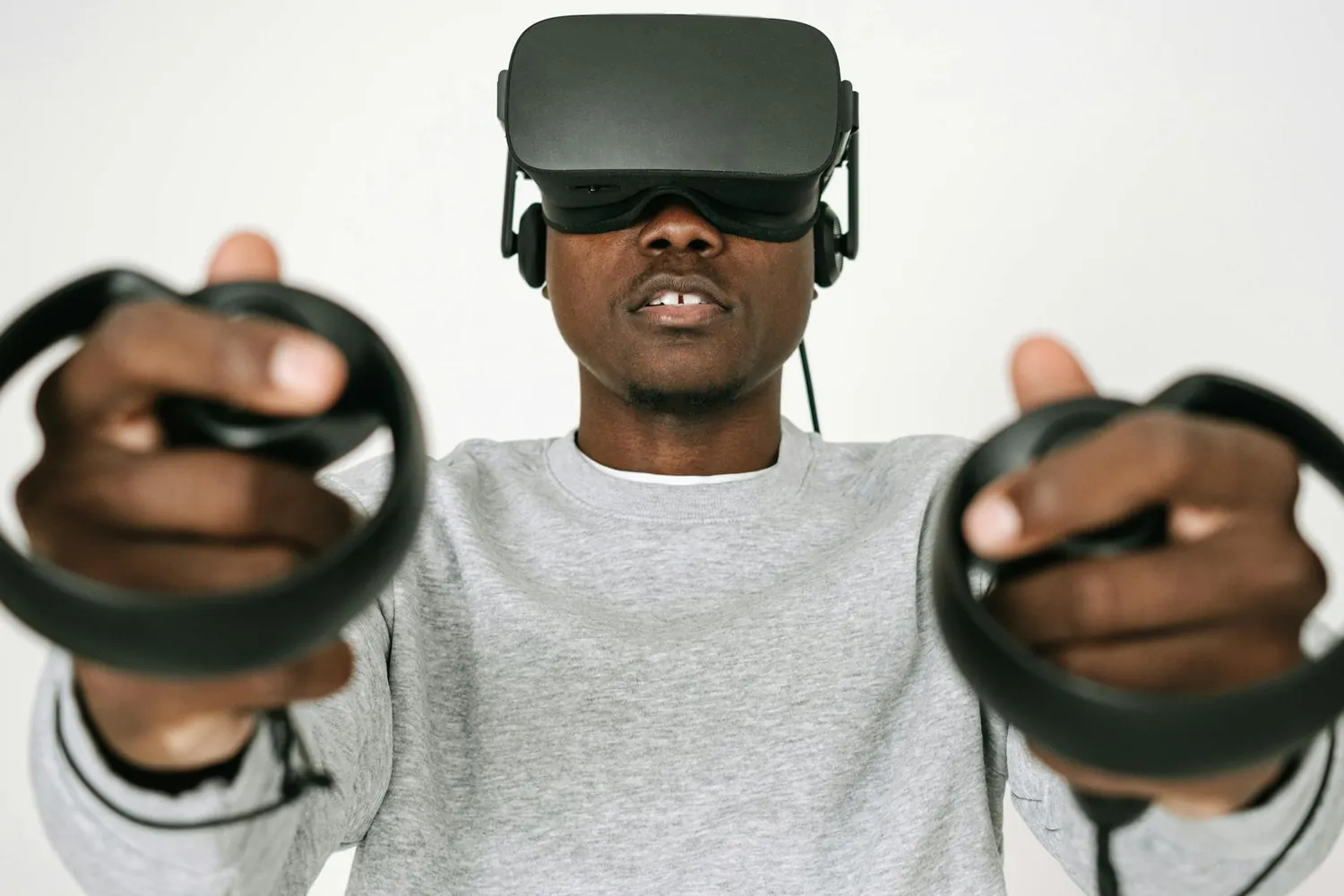
Revolutionizing Cloud Gaming Through Technology
The landscape of gaming has dramatically evolved over the past
decade, with cloud gaming emerging as a transformative force.
Traditionally, gaming was hardware-dependent, requiring
powerful consoles or high-end PCs to deliver quality
experiences. However, cloud gaming shifts this paradigm by
allowing users to stream games directly from the cloud,
minimizing local hardware requirements. Recent technological
advancements have further enhanced user experience, primarily
through latency reduction and improved graphics.
Latency Reduction: A Game Changer
Latency refers to the delay between a player’s action and the
corresponding response in the game. High latency can severely
impact gameplay, making it imperative for cloud gaming
services to minimize this delay. Recent breakthroughs in
network infrastructure, including the deployment of 5G
networks and edge computing, have significantly reduced
latency.
The Role of 5G
5G technology is pivotal in lowering latency. With speeds up
to 100 times faster than 4G, 5G facilitates real-time data
transmission, crucial for seamless cloud gaming experiences.
The enhanced speed and reliability of 5G networks enable
players to enjoy high-quality gaming without lag, even in
multiplayer environments.
Edge Computing’s Contribution
Edge computing brings data processing closer to the user,
reducing the distance information needs to travel and thus
decreasing latency. By processing data at the edge of the
network rather than relying on distant servers, cloud gaming
platforms can offer quicker responses and smoother gameplay.
Enhancing Graphics for Immersive Experiences
Graphics quality is another critical aspect that defines user
experience in cloud gaming. Advances in GPU technology and
cloud infrastructure have enabled cloud gaming providers to
deliver visually stunning games without compromising
performance.
Advancements in GPU Technology
The development of more powerful GPUs has allowed cloud gaming
services to render high-definition graphics and complex game
environments efficiently. GPUs such as NVIDIA’s RTX series
provide support for ray tracing—a technology that simulates
real-time light reflections—creating more realistic visual
effects.
Scalable Cloud Infrastructure
Cloud infrastructure scalability is essential for handling the
demanding requirements of modern video games. Providers like
Google Stadia and NVIDIA GeForce Now have invested heavily in
robust server farms that can handle high graphic loads,
ensuring consistent performance across diverse devices.
User-Centric Design and Accessibility
The shift towards user-centric design in cloud gaming focuses
on making games more accessible and intuitive for a broader
audience. This involves adapting game interfaces for different
devices and ensuring that games are easy to navigate,
irrespective of the user’s experience level.
-
Cross-Platform Accessibility: Many cloud
gaming services offer cross-platform compatibility, enabling
users to switch between devices seamlessly. This flexibility
enhances accessibility and allows users to continue their
gaming sessions without interruption. -
Adaptive Interfaces: Game developers are
increasingly utilizing adaptive UI designs that adjust to
various screen sizes and resolutions, improving user
experience on both large monitors and small mobile screens.
Artificial Intelligence in Cloud Gaming
AI is revolutionizing cloud gaming by enhancing both gameplay
mechanics and user interactions. AI algorithms are used to
optimize streaming quality dynamically, adjusting settings
based on network conditions and device capabilities.
Dynamic Streaming Optimization
AI-driven dynamic streaming technologies allow for real-time
adjustment of resolution and frame rate based on network speed
and stability. This ensures a smooth gaming experience even
when network conditions fluctuate.
Enhanced Gameplay Interactions
AI also enriches gameplay by generating more responsive
non-player characters (NPCs) and personalizing game scenarios
to fit individual play styles, making games more engaging and
tailored to the player.
The Future: Augmented Reality (AR) and Virtual Reality (VR)
The integration of AR and VR into cloud gaming is expected to
further redefine user experiences by offering immersive
environments that go beyond traditional gaming boundaries.
VR Streaming Over the Cloud
Streaming VR content via the cloud poses challenges due to the
intensive data and low-latency requirements, but advancements
in network technology are paving the way for this possibility.
Cloud-based VR could democratize access to high-quality
virtual experiences by removing the need for expensive local
hardware.
Augmented Reality Enhancements
AR in cloud gaming can enhance physical spaces with digital
overlays, creating interactive environments. This technology
can transform how users interact with games by blending
virtual elements with real-world surroundings.
Practical Tips for Gamers
For gamers looking to maximize their cloud gaming experience,
here are some practical tips:
-
Optimize Network Settings: Ensure your
router settings are optimized for gaming traffic by enabling
Quality of Service (QoS) settings, which prioritize gaming
packets over other types of data. -
Regular Software Updates: Keep your system
software up to date to benefit from the latest performance
improvements and security patches offered by service
providers. -
Select Appropriate Hardware: While high-end
hardware isn’t necessary for cloud gaming, using a device
with a reliable internet connection and good display can
enhance your experience.
Conclusion: A New Era of Gaming
As technology continues to advance, the capabilities and
experiences offered by cloud gaming will evolve rapidly. The
reduction in latency and enhancement of graphics are just
beginning; future innovations promise to push boundaries
further, making cloud gaming an ever-more immersive and
accessible form of entertainment. Embracing these changes will
unlock new opportunities for gamers worldwide, setting the
stage for a vibrant future in digital entertainment.