Revolutionizing Agriculture with AI-Enabled Drones
The integration of AI into agriculture is transforming traditional farming methods. One of the most impactful implementations is through AI-enabled drones, which are enhancing crop management significantly.
Precision Agriculture in Practice
Drones equipped with AI capabilities are enabling precision agriculture by providing real-time data analysis and high-resolution imaging. These drones can cover large areas quickly, capturing detailed information about plant health, soil condition, and moisture levels.
For instance, SkyCrop Technologies, a company based in California, employs AI-driven drones to optimize irrigation strategies. By analyzing multispectral images, the drones assess water stress in plants, allowing farmers to adjust water delivery precisely where needed, conserving water resources while boosting yield.
Drone-Assisted Pest and Disease Management
Pest control is another area where AI drones are making a significant impact. Equipped with advanced sensors and machine learning algorithms, these drones can identify pest infestations early and trigger targeted interventions.
At GreenLeaf Farms in Iowa, drones monitor crop fields for signs of disease or pest activity. By processing thermal and hyperspectral data, they can pinpoint affected areas with a high degree of accuracy, enabling farmers to apply pesticides only where necessary, thus reducing chemical use and preserving ecosystem health.
Autonomous Tractors: The Future of Farm Labor
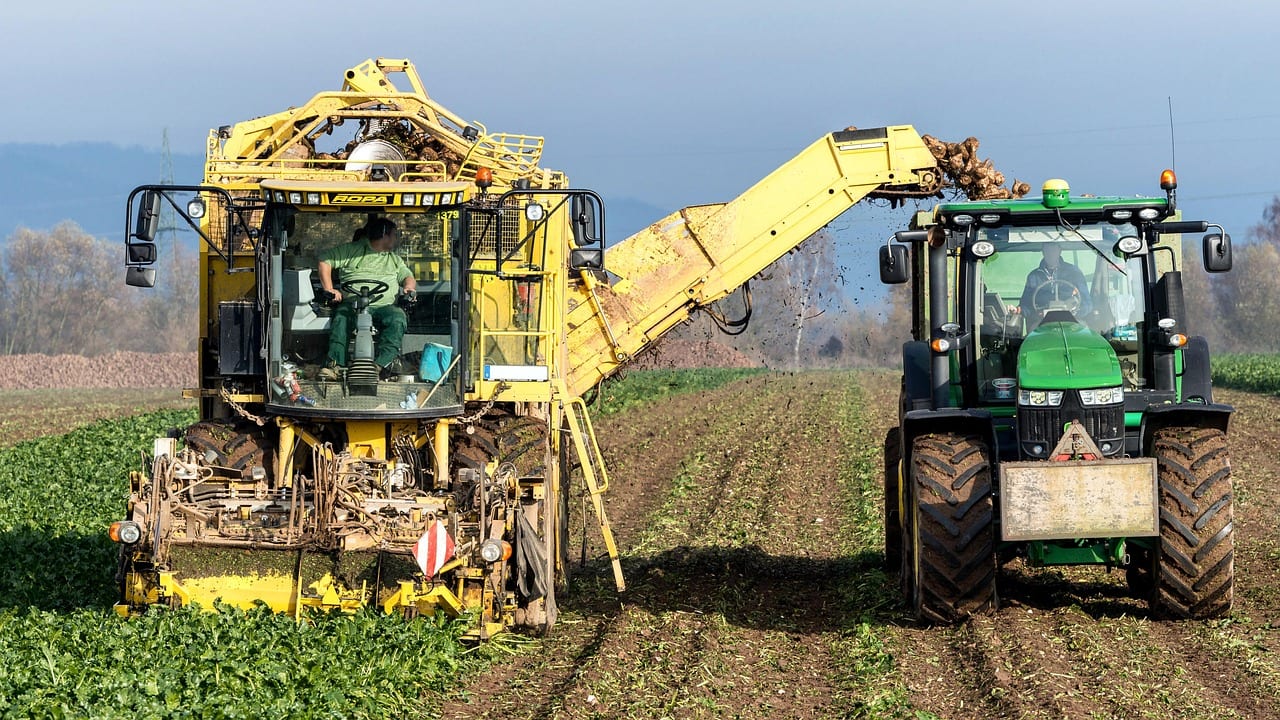
The advent of autonomous tractors is another groundbreaking application of AI in agriculture. These machines are designed to perform complex tasks without human intervention, improving efficiency and consistency in farm operations.
Case Study: RoboFarm’s Autonomous Tractor Fleet
RoboFarm, an innovative agricultural company in Australia, has deployed a fleet of autonomous tractors across its properties. These tractors are equipped with AI systems capable of executing tasks such as plowing, planting, and harvesting with minimal supervision.
The autonomous tractors utilize GPS for navigation and AI algorithms for decision-making processes. This technology not only reduces the need for manual labor but also ensures precise execution of tasks, thereby increasing productivity and minimizing waste.
Enhancing Yield Predictions with AI
Another significant advantage of autonomous tractors is their ability to contribute to accurate yield predictions. By analyzing data collected from field sensors and past performance metrics, AI models can forecast crop yields with impressive precision.
At HarvestPro Solutions in Canada, the integration of autonomous tractors with predictive analytics has allowed the company to achieve yield predictions with over 90% accuracy. This has enabled better resource allocation and financial planning for the farmers involved.
Adopting AI Technologies: Challenges and Considerations
Despite the clear advantages of AI technologies in agriculture, there are several challenges that need addressing for widespread adoption.
- Cost: The initial investment for AI equipment can be prohibitive for small-scale farmers.
- Technical Expertise: Operating advanced machinery requires knowledge and training, which may not be readily available in rural areas.
- Data Security: As farms become increasingly data-driven, concerns over data privacy and security are paramount.
Navigating the Path Forward
To overcome these challenges, partnerships between technology providers and agricultural stakeholders are crucial. Training programs, financial support mechanisms, and robust data governance policies can facilitate the transition towards smarter farming practices.
Mini-Framework for Implementing AI in Farming Operations
- Assessment: Begin by evaluating specific needs and potential benefits of AI technologies in your farm operations.
- Technology Selection: Choose technologies that align with your goals—whether it's drones for monitoring or tractors for automation.
- Pilot Program: Implement a small-scale pilot program to test the chosen technology under real-world conditions.
- Data Integration: Ensure seamless integration of new data streams into your existing systems for holistic analysis and decision-making.
- Training: Invest in training for staff to effectively operate new technologies and interpret data outputs.
This mini-framework offers a structured approach for farms considering adopting AI technologies, ensuring a smooth transition while maximizing potential benefits.