The Role of AI in Modern Industry
The advent of artificial intelligence has revolutionized many aspects of modern industry, particularly in the realm of predictive maintenance. This advancement allows companies to not only enhance operational efficiency but also significantly reduce costs and downtime associated with machinery failures. AI-driven predictive maintenance leverages data collected from various sensors embedded in industrial equipment to anticipate failures before they occur.
Understanding Predictive Maintenance
Predictive maintenance is a proactive approach that aims to predict when equipment might fail, allowing for timely maintenance before the actual breakdown occurs. This strategy stands in contrast to reactive maintenance (fixing equipment after it fails) and preventive maintenance (scheduled maintenance based on time or usage intervals). By analyzing data such as vibration analysis, temperature monitoring, and oil analysis, predictive maintenance can significantly extend the life of machinery and improve safety within manufacturing facilities.
AI-Powered Predictive Maintenance Techniques
- Machine Learning Algorithms: Machine learning algorithms are employed to analyze historical data and recognize patterns that precede equipment failure. These algorithms can adapt to new data inputs, improving their predictive accuracy over time.
- Neural Networks: Deep learning models, such as neural networks, can process large volumes of complex data, identifying subtle anomalies that simpler models might miss.
- Digital Twins: Digital twins create virtual replicas of physical assets, providing real-time monitoring and analytics. This allows for scenario testing and enhanced decision-making capabilities.
Case Studies: Real-World Applications
Several industries have successfully implemented AI for predictive maintenance with substantial benefits. Below are a few illustrative case studies:
Aerospace Industry: Rolls-Royce
Rolls-Royce employs AI-driven predictive maintenance in its aircraft engines. Using data from thousands of sensors, AI models predict engine component wear and potential failures. As a result, airlines experience reduced downtime and improved fuel efficiency, achieving an estimated 10-15% cost savings on maintenance operations.
Automotive Manufacturing: Ford Motor Company
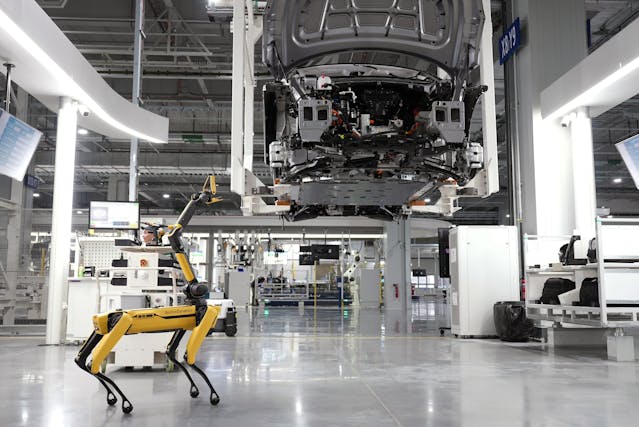
Ford has integrated AI technologies to monitor assembly line machinery. By deploying machine learning models to analyze real-time data, Ford can predict mechanical issues before they cause costly delays. This implementation has led to a decrease in unexpected shutdowns by approximately 30%.
Oil & Gas Sector: Shell
In the oil and gas industry, Shell utilizes AI for monitoring equipment such as pumps and compressors. AI algorithms process data to foresee equipment failures, helping Shell reduce maintenance costs by up to 20% while enhancing production efficiency.
The Workflow of AI-Enhanced Predictive Maintenance
The workflow for implementing AI-driven predictive maintenance can be broken down into several key steps:
- Data Collection: Collect data from various sources such as IoT devices, sensors, and historical records.
- Data Preprocessing: Clean and preprocess the data to ensure its quality and relevance for model training.
- Model Training: Use historical data to train machine learning models. Techniques like supervised learning are commonly employed to develop these predictive models.
- Deployment: Deploy the trained models into the production environment where they continuously analyze live data streams.
- Anomaly Detection: The models detect anomalies or deviations from normal operation patterns, triggering alerts for potential issues.
- Maintenance Scheduling: Based on predictions, schedule maintenance activities at optimal times to minimize disruption.
The Benefits of AI in Predictive Maintenance
The use of AI in predictive maintenance offers numerous advantages:
- Cost Reduction: Predictive maintenance reduces repair costs by avoiding major breakdowns and extending the lifecycle of machinery.
- Increased Uptime: Timely maintenance leads to fewer unplanned outages, ensuring continuous production and higher revenue generation.
- Enhanced Safety: Early detection of potential failures reduces the risk of accidents, protecting both employees and assets.
Challenges and Considerations
While AI offers significant benefits for predictive maintenance, there are challenges to consider:
- Data Quality: The accuracy of predictions relies heavily on the quality of input data. Incomplete or noisy data can lead to false positives or missed predictions.
- Integration Complexity: Integrating AI systems with existing industrial infrastructure can be complex and may require specialized expertise.
- Cultural Shift: Transitioning to an AI-based maintenance strategy requires changes in organizational culture and mindset. Employee training and buy-in are crucial for successful implementation.
Future Trends in AI and Predictive Maintenance
The future holds promising developments in AI-driven predictive maintenance. As AI technologies continue to evolve, industries can expect improvements in model accuracy, speed, and adaptability. Advancements in edge computing will enable real-time processing directly at the source, reducing latency and dependency on centralized systems. Additionally, the incorporation of more advanced analytics and IoT integration will further enhance the predictive capabilities of AI systems.
The journey towards fully autonomous predictive maintenance continues to progress. In coming years, industries may witness a transformation where human intervention becomes minimal as machines predict, plan, and execute maintenance tasks independently.