Understanding Quantum Computing: A Brief Overview
Quantum computing is a rapidly evolving field that aims to revolutionize the way we process information. Unlike classical computers, which use bits as the smallest unit of data, quantum computers use qubits. Qubits harness the principles of quantum mechanics, including superposition and entanglement, to perform computations at speeds unimaginable with classical systems.
Among the various approaches to building quantum computers, two prominent technologies have emerged: superconducting qubits and trapped ions. Each has its own set of advantages and challenges when it comes to scalability, error rates, and computational speed. This article delves into these two technologies, exploring their characteristics and suitability for different applications.
Superconducting Qubits: The Powerhouse of Quantum Processing
How Superconducting Qubits Work
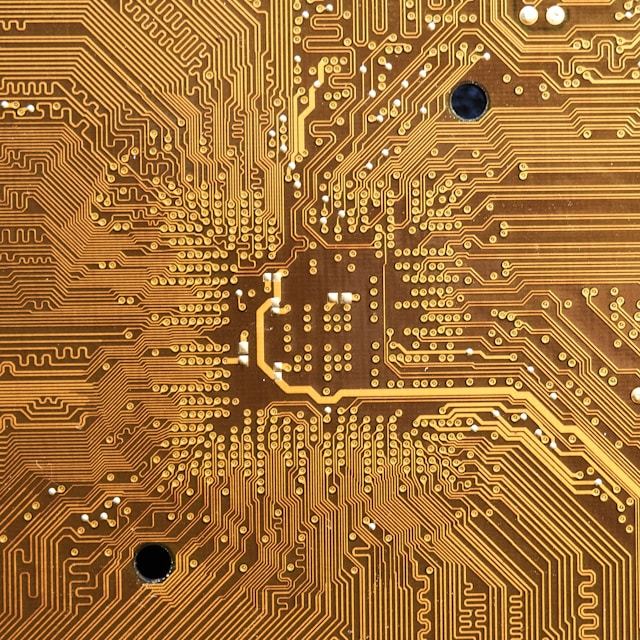
Superconducting qubits are implemented using circuits made of superconducting materials that exhibit zero electrical resistance at extremely low temperatures. These circuits form Josephson junctions, which are capable of representing quantum states. The qubits are manipulated using microwave pulses that alter their quantum states, allowing for computational processes.
Advantages of Superconducting Qubits
One of the key advantages of superconducting qubits is their speed. These qubits can switch states rapidly, which contributes to faster computation times. Additionally, the integration of superconducting qubits with existing semiconductor technologies makes them a practical choice for scaling up quantum systems.
- Scalability: Superconducting qubits are well-suited for integration into complex architectures due to their compatibility with established microfabrication techniques.
- Speed: They can perform gate operations in nanoseconds, facilitating rapid calculations.
- Maturity: As one of the most researched areas, they benefit from extensive development and optimization efforts.
Challenges Facing Superconducting Qubits
Despite their advantages, superconducting qubits face several challenges, particularly in terms of error rates. Decoherence, the loss of quantum information due to environmental interactions, remains a significant hurdle. Moreover, maintaining the extremely low temperatures required for superconductivity adds complexity to the system design.
Practical tips for mitigating these issues include employing sophisticated error correction protocols and improving cryogenic techniques to achieve better temperature control.
Trapped Ion Systems: The Precision Pathway
The Mechanics of Trapped Ion Qubits
Trapped ion quantum computers use individual ions confined in electromagnetic traps as qubits. These ions are manipulated using laser beams to achieve desired quantum states. The long coherence times of trapped ions make them particularly attractive for high-fidelity operations.
Benefits of Trapped Ion Systems
Trapped ion systems boast exceptionally low error rates due to their inherent isolation from external disturbances. This makes them ideal for applications where precision is paramount.
- Error Rates: The long coherence times result in highly accurate quantum operations.
- Flexibility: Their operational parameters can be finely tuned through laser adjustments.
- Simplicity in Connectivity: Connections between qubits are relatively straightforward due to direct manipulation via lasers.
Limitations in Trapped Ion Systems
The primary drawback of trapped ion systems is their slower processing speed. Operations on trapped ions are generally slower compared to those on superconducting qubits. Additionally, scaling these systems involves intricate engineering challenges related to controlling and managing multiple ion traps simultaneously.
To address these challenges, researchers are developing hybrid systems that combine elements of both trapped ions and other quantum technologies, potentially harnessing the strengths of each approach.
Selecting the Right Technology for Your Needs
Choosing between superconducting qubits and trapped ion systems depends largely on the specific requirements of your application:
- If speed is your primary concern—such as in tasks requiring rapid data processing—superconducting qubits may offer a more suitable solution.
- If accuracy is critical—such as in precision modeling or simulations—trapped ions might be the better choice.
Hybrid Approaches: Bridging the Gap
An emerging trend in quantum computing is the development of hybrid systems that incorporate elements from both superconducting and trapped ion technologies. By leveraging the speed of superconducting qubits alongside the precision of trapped ions, these systems aim to deliver robust performance across a wider range of applications.
The key to successful hybrid implementation lies in achieving seamless integration between different qubit types, ensuring that communication protocols effectively manage interactions across disparate platforms.
The Future Landscape of Quantum Computing
The landscape of quantum computing is ever-evolving, with new advancements continually pushing the boundaries of what is possible. Both superconducting and trapped ion technologies have significant roles to play in this future, contributing to diverse areas from cryptography to drug discovery.
The pursuit of scalable quantum solutions will likely benefit from continued research and collaboration across disciplines. As scientists gain deeper insights into quantum behaviors and develop innovative engineering solutions, the dream of a fully operational, large-scale quantum computer becomes increasingly feasible.