Two Brooklyn projects have done what community mesh networking is supposed to do, and both publish enough detail to be checked. Red Hook Wi-Fi has been run by the Red Hook Initiative since the fall of 2011, and it stayed up when Hurricane Sandy took the neighborhood’s commercial service down. NYC Mesh, founded in 2014, reported 1,819 active location installations in August 2026. Neither is a replacement for a carrier, and the people who run them say so in their own documentation, which is the most useful thing about them.
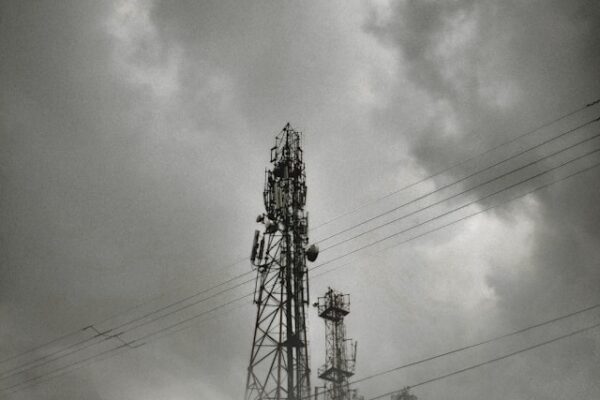
Rooftop nanostations in Red Hook, before and after Sandy
Red Hook Wi-Fi was founded in the fall of 2011 by the Red Hook Initiative, a Brooklyn 501(c)(3), working with the Open Technology Institute. It was built on Commotion, an open-source mesh platform, using nanostations mounted on rooftops, some of them solar-powered, with initial capacity supporting up to 150 simultaneous users. The need was local and measurable: over 30 percent of the neighborhood’s population had no broadband access at home.
Hurricane Sandy in 2012 is what the project is remembered for, and the reason is specific. Red Hook remained connected through its mesh network while commercial service was down, and the Red Hook Initiative’s headquarters became a hub for volunteer coordination, donation collection and food distribution. FEMA connected the network to its satellite system, which linked residents to the Red Cross for relief, food bank and shelter information. In 2015 the project was selected for the city’s Resiliency Innovations for a Stronger Economy initiative.
Note what carried the traffic out of the neighborhood in the emergency. The mesh distributed connectivity across rooftops. A federal agency’s satellite link provided the path to everything else.
What 1,819 installations cost the households that get them
NYC Mesh grew out of a predecessor group, NYC Meshnet, formed in 2012 to experiment with the Cjdns mesh protocol, and was founded in its current form in 2014. The Institute for Local Self-Reliance, reporting through communitynetworks.org on 18 August 2026, records 1,819 active location installations and over 2,000 active member nodes across the five boroughs, and describes the project as the second largest grassroots mesh network worldwide and the largest community-based mesh network in the Americas.
The economics are published by the organization itself, which is unusual and worth using.
- Average equipment cost is 240 dollars, subsidized to 110 dollars, or payable as 40 dollars per month for six months.
- There is a one-time 50 dollar charge covering install leader expenses.
- Members are asked to set up a recurring monthly donation of 20, 30, 50 or 60 dollars, on a pay-what-you-can basis.
- New York State’s ConnectALL initiative awarded NYC Mesh 898,000 dollars as part of an 8.3 million dollar round, with a target of connecting at least 500 additional low-income households in Central Brooklyn.
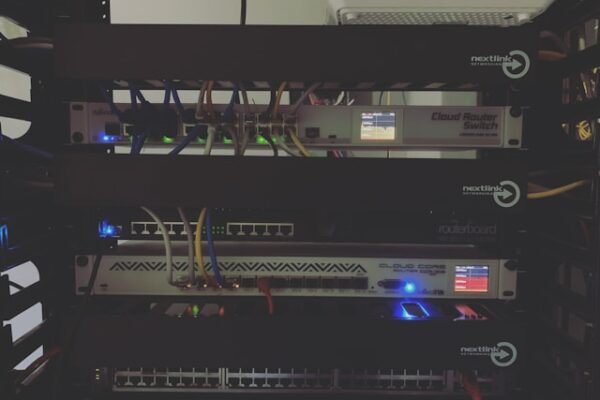
- The hardware is commodity: Ubiquiti AirFiber and Wave radios, Mikrotik RB5009 and CCR2116 or Netpower 16P and CRS317 for routing and switching, primarily fixed wireless with dark fiber in select locations.
The mesh ends at a data center on Pearl Street
The popular framing of community mesh as an alternative to the internet does not survive contact with the network diagram. NYC Mesh’s first supernode sits at 375 Pearl Street, in a Sabey Data Centers facility, connected through the DE-CIX internet exchange and peering with Akamai, Apple, Google and Hurricane Electric. A second supernode operates at DataVerge in Industry City, Brooklyn. Routing within the network moved from BGP to OSPF.
That is a community-owned access network with commercial transit, and the ownership is the point rather than the independence. Members own the rooftop equipment and the last mile. The bytes still leave through an internet exchange at a commercial data center, on terms negotiated by volunteers.
Limits the operators publish about themselves
NYC Mesh’s own frequently asked questions are candid in a way vendor material rarely is. Connecting requires a direct line of sight to an existing node already on the network, which alone bounds where the network can grow in a city of tall buildings. Wait times vary with the availability of volunteer installers and are usually around two weeks. Installations are canceled in bad weather. On voice over IP the organization states that it does not provide any guarantee of functionality. On privacy it states that it is unable to detect or prevent traffic monitoring by its upstream providers.
Detroit’s Equitable Internet Initiative, run by the Detroit Community Technology Project with Grace in Action, Church of the Messiah, the North End Woodward Community Coalition and Community Tech New York, shows the labor side of the same constraint. The project reports training 45 Digital Stewards across three Detroit neighborhoods in 2017, and connecting more than 150 homes across those neighborhoods by the end of 2018, against a stated need in which 38 percent of homes have no internet connection, 63 percent of low income homes have no in-home broadband and 70 percent of school-age children have no internet access at home.
One hundred and fifty homes over roughly four years, sustained by 45 trained stewards, is a real achievement and a small one. Community networks work. They do not scale the way a franchise buildout does, because the thing they substitute for capital is volunteer time.
Philadelphia already tried the citywide version
The ambition of blanketing a whole city with municipal wireless was tested at scale and failed. Wireless Philadelphia launched in August 2004 and EarthLink withdrew in June 2008. By May 2008, in a city of roughly 1.5 million people, the network had just over 6,000 customers. Technical.ly’s account of the collapse names two causes: access points installed in street lights were buggy and connection speeds were well under what had been advertised, and connectivity alone was insufficient because residents lacked computers and digital literacy training. The program also lost momentum when the city’s chief information officer, Dianah Neff, departed in August 2006, before the build-out was complete.
New York’s current municipal work reflects those lessons rather than repeating them. The NYC Digital Equity Roadmap, announced by the Office of Technology and Innovation on 7 March 2025 with 2.4 million dollars in capital funding, is built around the finding that an estimated 10 percent of New Yorkers still lack a computer at home. The city’s Big Apple Connect program reports over 120,000 subscribed NYCHA households, about 80 percent of eligible households, across 220 developments. Devices, skills and subsidized service at scale sit alongside the rooftop networks rather than in place of them.
Sources: Institute for Local Self-Reliance, communitynetworks.org · NYC Mesh · Wikipedia, Red Hook Wi-Fi · Detroit Community Technology Project · Technical.ly · City of New York